
The Power of a Word

What is today’s word? I learned from my wife to assign one word to every day. I do it in the morning as I sit with my coffee, look at my garden, and contemplate how to spend this day.

If you just look at your task list, it will contain dozens of things you could do with your day. Letting your mind wander and settle on one word will tell you what is really important today. On some days, it will be something productivity-focused like “programming” or “debugging.” On other days, it might be development-oriented like “learn” or “clarity.” If your mind comes up with “rest,” that is a strong indication that you’ve been pushing yourself too hard.

Try it out. Set one word for the day tomorrow morning, and reflect on your day tomorrow evening. If having a focus word helps you, make it a habit.


Find a Network

Let 2026 be a year where you expand your network and learn something new. If you are based in Denmark, work with IT architecture and is a member of Finansforbundet, a good option is to join the IT architecture network group. Participation is free, and we meet four times in 2026. First time is February 26th, where the topic is the role of the IT architect today and in the future.

The world of IT has never moved faster. Find someone to exchange knowledge with.

Make Your Task a Habit

If you have a large task to complete and it doesn’t easily break into components, make it a daily habit.

My digital photo catalog contains 68,255 images right now. Some are tagged and evaluated, many are not. I have created a habit of working a little on cleaning up my photo collection every day. That means I feel I’m progressing towards my goal of having everything organized, even though there is still a long way to go.

For me, it works to have a habit-tracking app that reminds me not to “break the chain” every evening if I haven’t gotten around to a little photo sorting during the day. But you can also establish a habit by piggybacking it onto something you already do.

The difference between feeling in control and feeling overwhelmed by large tasks is whether you are moving towards your goal or are standing still. Move.

AI is not Coming for Your Job

In a real-world test, the best AI completed 1 in 40 full tasks satisfactorily. Researchers put together the Remote Labor Index, a set of 100 typical remote working tasks – data visualization, architecture drawing, game development, etc. These are the kind of tasks you would normally give to remote gig workers through an online task platform.

The results are sobering. The best AI was Manus, delivering 2.5% acceptable results. Gemini 2.5 Pro managed only 0.8% task completion.

Don’t be blinded by the fact that AI can solve a few very specific tasks well. In the real world, AI is very, very far from taking anybody’s job.

Excel Addiction

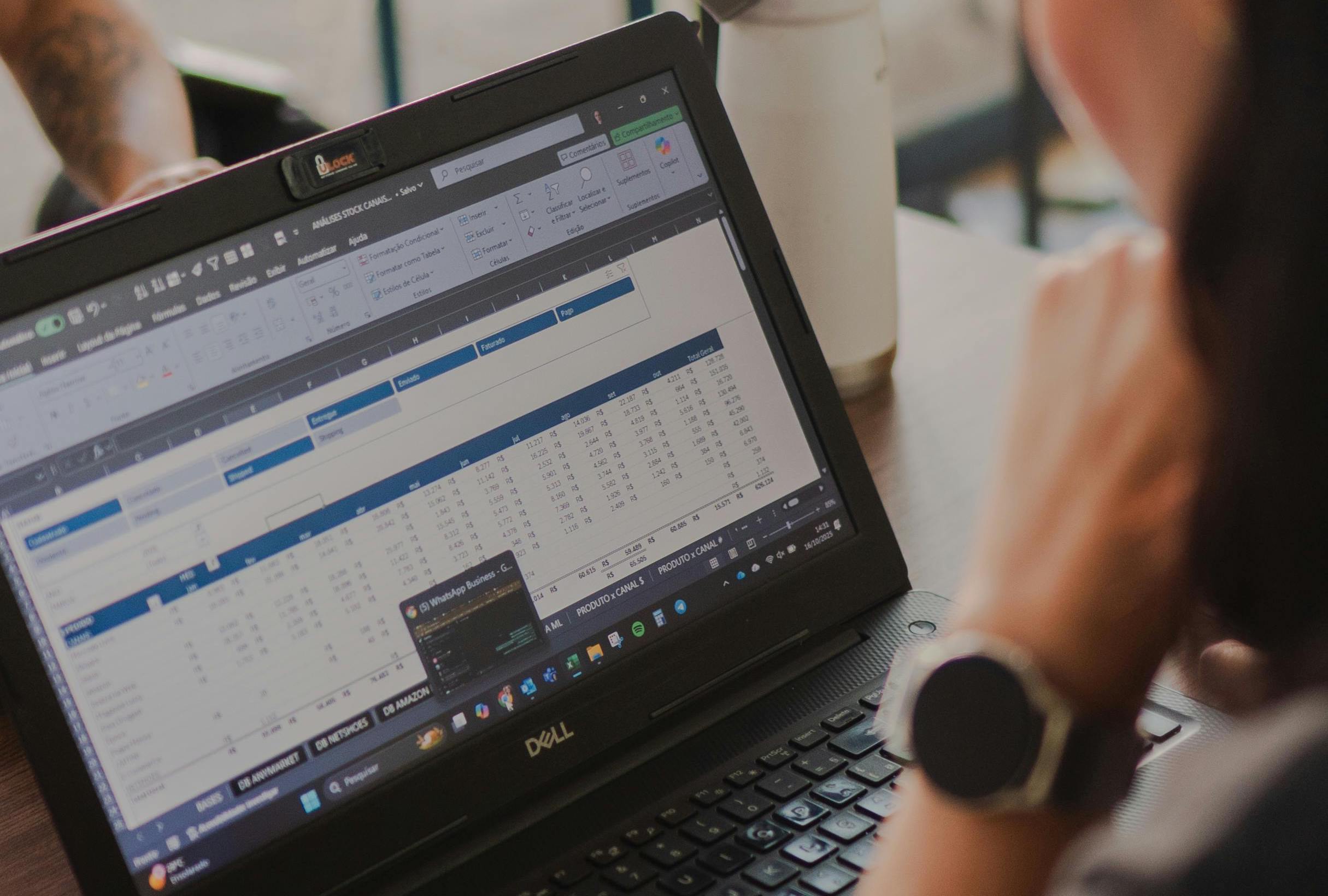
It’s not your data, it’s the company’s data. That’s why it belongs in a database or some other kind of managed data store, not in your personal Excel files. But it turns out to be very difficult to break a 40-year habit of circumventing Central IT and hacking something together with a few macros.

There is any number of well-documented disasters caused by excessive Excel use, including during the Coronavirus pandemic, where the UK health authorities used an old version to track infections. It took days before anybody noticed that the number of cases was stuck at exactly 65,536.

Everybody is talking about having an AI policy. You need that. But you also need a data policy. And part of that policy is going to be placing limits on Excel.

Simple Health

To improve your health, do the simplest thing that could possibly work. Don’t start an intricate supplement regimen or try to follow a complex set of dietary guidelines. The traveling snake oil salesman has moved online and is now a health influencer, but that doesn’t remove the quackery.

Decide on one parameter you want to track (weight, sleep, whatever) and make one simple change to your life. For weight loss, it could be preparing more meals from scratch. For sleep, it could be putting down your phone one hour before bedtime. Track your adherence to your chosen change and the tracked parameter for two weeks.

If you got results, good.

If you didn’t, either your adherence wasn’t strong because you couldn’t implement the change consistently, or the change didn’t affect the tracked parameter. Never mind. Choose another change and try again.

Digital Sovereignty

You need to think about Digital Sovereignty. Unless you are in the U.S., of course. For everybody else, this is a very salient topic. Especially for us in Denmark these days.

This doesn’t mean that you have to free yourself from every American cloud provider. But it does mean there is a new item in your risk evaluation: Ending up on the Office of Foreign Assets Control (OFAC) blocklist.

Likelihood is Rare (1) for almost everybody. But if Impact is Catastrophic (5), you end up with a medium risk: Mitigate if cost-effective.

Switching costs almost always make it not cost-effective to transition a running system. But when you are building anything new, you don’t have switching costs. And an effective mitigation is to avoid using U.S. providers.

You Can Do One Minute

There are two possible outcomes of this day: One is that you did no work towards your goals. And the other one is that you did.

You want every day in 2026 (and the rest of your life) to fall into the second category. The way to achieve that is to lower the bar. Yes, lower it. Decide that even one minute working towards your goals counts.

But one minute doesn’t make a difference, does it? Well, on its own, it’s still 6 hours more than nothing over a year. But the interesting thing is that once you get started on the one minute, it leads to another, and another. The hard thing about hard things is to get started. One minute counts.

Another Place Not to Use AI Chatbots

Alaska wanted an AI chatbot to give legal advice. Anybody care to guess how that went?

Yes, not well. They are now 15 months into a 3-month project, but expect it to go live this month.

I’ll make a prediction: This project will end up in the bucket of IT projects that sink without a trace, leaving only cost and no business benefit whatsoever. Sadly, one in four IT projects still end in that bucket. My hunch is that this number is increasing, as AI is incorrectly applied to more and more use cases.

If you are going to implement AI with an LLM, don’t do it in a critical application like giving legal advice to citizens. There is no way to stop an LLM from hallucinating. The only way to automate advice and be sure it is correct is with old-school expert systems.

Good AI Advice

Who advises you on AI? Don’t say ChatGPT. Also, don’t take advice from random blowhards on LinkedIn. You need advice from someone who has a realistic view of your situation and your business.

As a consultant, I’m all for having external advisers to bring you an outside perspective. But it is equally important to have a well-founded inside perspective.

I recommend establishing an internal AI advisory board within IT. Appoint some people interested in AI and give them a modest time budget to keep up to date with what is happening in the field. Make it as diverse as possible – juniors, seniors, developers, sysadmins. If you are fortunate enough to have diversity in gender and ethnicity in your IT organization, also utilize that. Have your AI board meet with the CIO/IT leader regularly, and also have them present at department meetings.

Inside people are much more invested in finding AI tools that can truly help in your specific situation. They are also the ones who will suffer if you implement bad AI. That gives them a very good ability to see through exaggerated vendor claims.